Why Do I Fear Checking My Bank Account So Much?
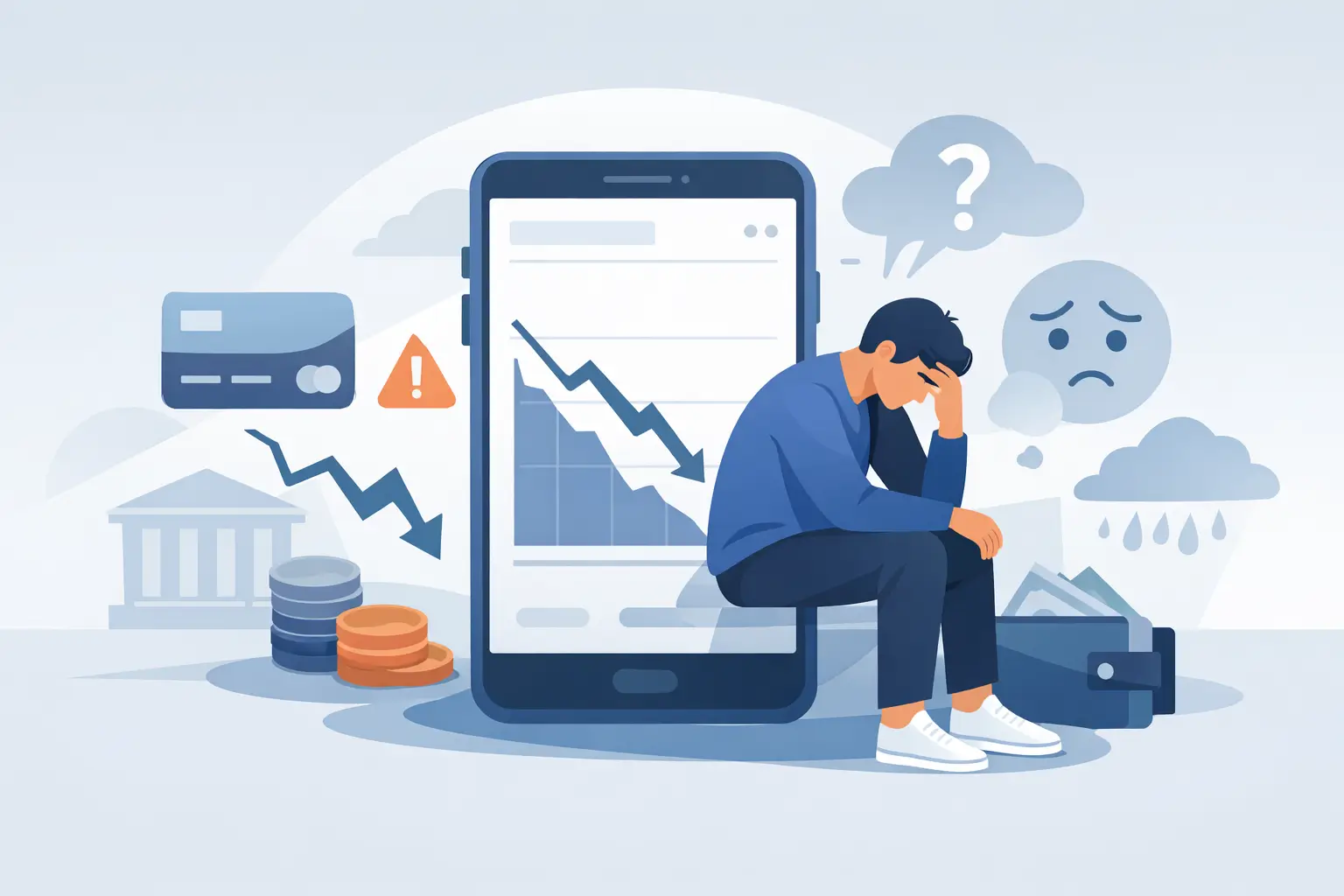
The number is sitting there, unchanged whether you look at it or not. Yet if you have ever thought, why do I fear checking my bank account, you know the feeling is not really about a banking app. It is the tightness in your chest before logging in, the urge to wait until after payday, the strange relief of not knowing for one more day. This response is more common than people admit, and it is rarely a sign that you are careless or incapable.
Avoiding your balance is often a protective strategy. Your mind has learned that money information can bring shame, fear, conflict, or a sense of failure. So it offers a short-term solution: do not look. The trouble is that temporary relief can slowly turn uncertainty into a larger source of stress.
Why Do I Fear Checking My Bank Account?
A bank balance is objective data, but we do not experience it objectively. We filter it through our personal money story: the collection of early lessons, past setbacks, family beliefs, cultural messages, and private moments that taught us what money means.
For one person, a lower-than-expected balance may trigger memories of a parent worrying at the kitchen table. For another, it may stir the belief that responsible adults should always be ahead. Someone else may associate checking accounts with arguments, debt collectors, job loss, or the humiliation of asking for help. In each case, the account balance becomes more than a number. It becomes evidence in a case against the self.
That is why conventional advice such as “just track every dollar” can fall flat. Tracking is useful, but it asks you to perform a behavior before understanding what makes the behavior feel unsafe. When the emotional cost of looking feels high, even a simple five-minute task can become something you postpone for weeks.
Avoidance works - until it does not
Financial avoidance has a logic. If opening your app brings a surge of anxiety, delaying it reduces that anxiety immediately. Your brain notices the relief and learns: avoiding the account helped.
This is a familiar behavioral loop. The problem is that the relief does not resolve the underlying situation. It may lead to missed payments, surprise overdrafts, delayed decisions, or spending based on guesswork. Then the eventual check feels even more loaded, reinforcing the belief that money is dangerous to face.
The goal is not to shame yourself out of the loop. Shame tends to create more avoidance. The goal is to recognize the pattern with enough compassion and clarity that you can interrupt it.
The Financial Archetypes Behind Account Anxiety
People avoid their accounts for different reasons. Looking at the emotional pattern underneath can tell you far more than a generic rule about budgeting.
The Protector
The Protector values safety and works hard to prevent future pain. They may save diligently in some areas, but checking an account can feel threatening when the balance is lower than their internal safety threshold. It is not necessarily about whether they can pay this month’s bills. It is about the fear that one unexpected expense could expose them to risk.
For the Protector, the helpful question is not, “Why am I overreacting?” It is, “What would help me feel informed without needing perfect certainty?” A small cash buffer, a clear view of upcoming bills, and a recurring check-in can reduce the sense of hidden danger.
The Avoider
The Avoider may experience money as emotionally heavy, confusing, or morally charged. They often know, at least broadly, what they should do. The gap is not knowledge. It is the discomfort that appears when knowledge becomes specific.
Avoiders benefit from making the first step almost too small to resist. Instead of reviewing every transaction, they might open the account and look only at the available balance. The next day, they can check upcoming payments. Gradual exposure helps the nervous system learn that information is uncomfortable, but survivable.
The Striver
The Striver connects money with achievement, progress, and self-worth. Checking an account can feel like receiving a grade. A number that does not match their expectations may seem to prove they are behind in life, despite their effort or income.
The Striver needs a wider definition of progress. A balance reflects timing, obligations, choices, and circumstances. It does not measure discipline, intelligence, or potential. Separating identity from the number makes room for practical action without turning every financial decision into a verdict.
The Giver
The Giver often finds meaning in supporting others. They may spend generously, cover shared costs, or say yes before checking what they can realistically afford. Looking at the account later can bring guilt or resentment: guilt for wanting limits, resentment for carrying too much.
For the Giver, account awareness is not selfish. It is what makes generosity sustainable. Checking the balance before committing money is a way to honor both personal stability and the relationships they care about.
These patterns can overlap. You might be a Protector around savings, a Giver with family, and an Avoider after a stressful month. The point is not to force yourself into a label. It is to see the belief driving the behavior, because a behavior makes more sense once you know what it is trying to protect.
Turn Checking Into a Practice of Self-Trust
The most effective change is usually not an intense financial overhaul. It is a repeated, low-drama practice that replaces dread with familiarity.
Choose a predictable time to check your account, ideally once or twice a week. Avoid doing it late at night, while rushing, or immediately after an emotional trigger if you can. Make the setting neutral: sit down with coffee, take one breath, and remind yourself that you are gathering information, not judging your character.
When you log in, focus on three questions: What is available right now? What is due before my next income arrives? What is one choice I can make from here? That final question matters. It turns a passive moment of dread into agency.
If the answer is that your balance is lower than expected, resist the urge to solve your entire financial life in one sitting. First, name the facts. Then choose the next useful action, whether that is moving money, postponing a purchase, calling a provider, or simply reviewing transactions tomorrow. Clear action lowers anxiety more effectively than self-criticism.
It also helps to separate financial appointments by purpose. A quick balance check should stay quick. A weekly review can include bills and transactions. A monthly session can address spending patterns, savings, debt, or goals. When every login becomes a full audit, your brain has good reason to avoid it.
When the Fear Is More Than a Habit
Sometimes account anxiety points to a concrete financial problem that needs support, such as mounting debt, unstable income, compulsive spending, or a controlling partner. In those situations, self-awareness remains valuable, but it should be paired with practical help. A nonprofit credit counselor, a therapist familiar with financial anxiety, or a trusted financial professional can help you move from isolation to a workable plan.
If money conversations in a relationship feel unsafe, prioritize your physical and emotional safety. Financial control can be part of abuse, and access to information may need to be handled carefully. You do not have to force a routine that puts you at risk.
For most people, though, the first breakthrough is quieter. It is recognizing that the fear is not proof that you are bad with money. It is a signal that money has become tied to something tender in your story.
At The Money Story, we view that signal as a place to begin. Once you understand the role money has been playing in your identity - protector, scorecard, source of freedom, proof of worth, or source of conflict - you can create habits that fit the real pattern rather than fighting yourself with rules that never did.
The next time you hesitate before opening your banking app, try a different sentence: “I can handle knowing.” You do not need to feel perfectly calm before you look. You only need to make the number a little less powerful than the person who is looking at it.